
Computer vision
Carpe Vision
Image intelligence that adds visual signal detection to modern insurance workflows.
Primary buyer: Claims and SIU teams handling visual evidence
Related workflow: Investigations and SIU
Extract more structured insight from visual evidence, faster and with better consistency.
Overview
Carpe Vision extends the platform with computer vision capabilities so teams can identify, classify, and act on image-based signals with greater speed and consistency.
Computer vision matters in insurance when it strengthens expert teams, improves consistency, and accelerates review in evidence-heavy workflows.
Buyer and team
Claims and SIU teams handling visual evidence
Workflow problem
Why teams buy this.
Image-heavy workflows are slow to review consistently, especially when evidence volume grows faster than specialist capacity.
Inputs and outputs
What the product looks at and what teams get back.
Inputs and signal sources
Outputs and deliverables
Data usage
What this product uses and what it does not.
Clear guardrails on data usage help teams evaluate fit, trust, and compliance readiness.
Data we use
Data we do not use
How it works in practice
The product in action.
See the product in context — how it captures signal, organizes findings, and delivers output into the workflow.
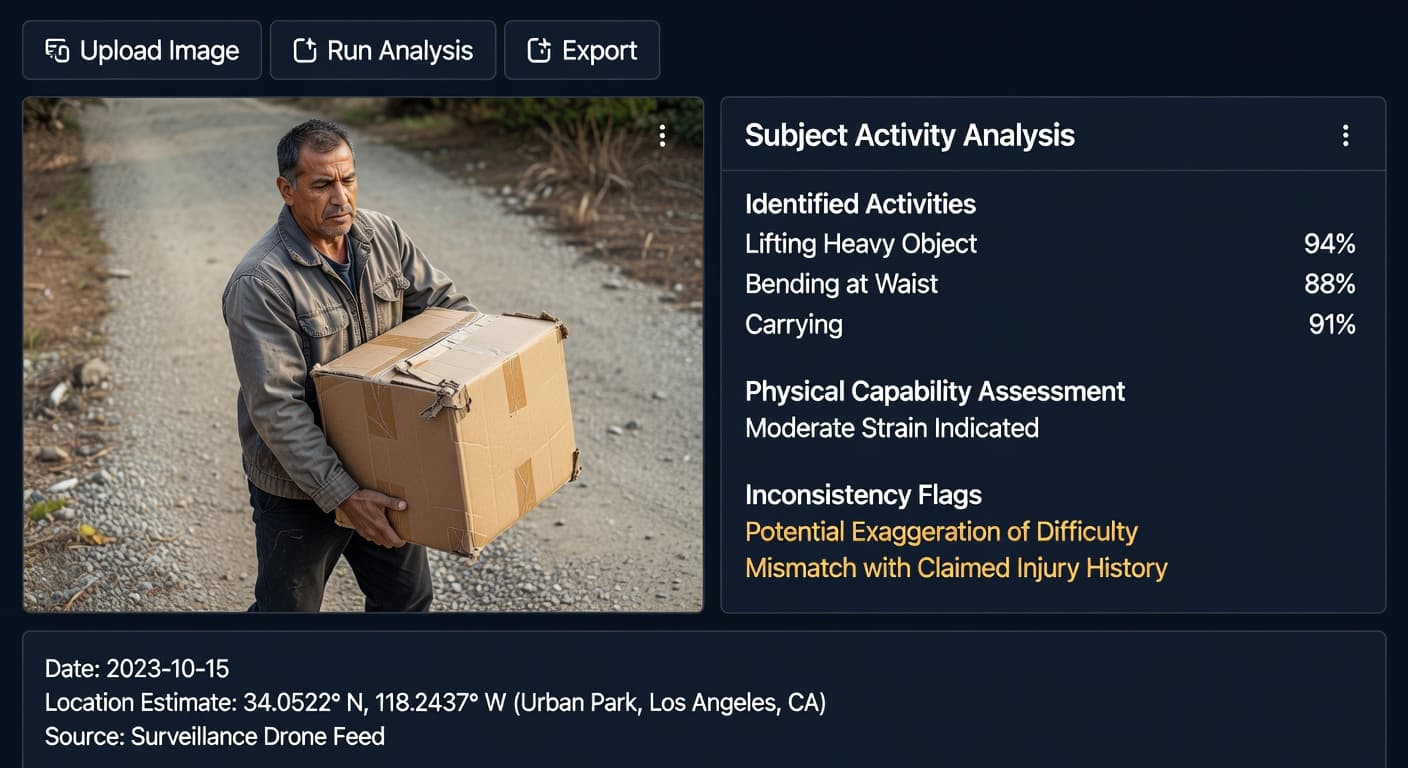
AI-powered image analysis delivers visual signal directly into the claims workflow.
Operating motion
How it works in practice.
Implementation
Implementation path and requirements.
5-7 weeks for controlled rollout in image-heavy workflows.
Steps
Requirements
Why buyers trust it
Built for reviewable output and real workflow fit.
Enterprise buyers care about signal quality, output clarity, and whether the product fits how teams already make decisions.
Keeps humans in the loop where review matters
Connects visual findings to broader case context
Strengthens existing claims and SIU motion instead of standing alone
Expansion path
Related products and the next logical motion.
This product sits inside the broader investigations and siu story and can expand into adjacent workflows cleanly.
FAQ
Questions teams ask before rollout.
Answers on data sources, implementation, pricing model, integration, and compliance.
What image data does Carpe Vision analyze?
Carpe Vision processes image evidence provided through authorized claims and SIU workflows, paired with case context for prioritization.
How long does implementation take?
Initial deployments typically run 5-7 weeks, including use-case definition, calibration, and reviewer workflow setup.
How is pricing usually structured?
Pricing generally reflects image volume, workflow complexity, and depth of classification and review orchestration.
Can findings flow into existing investigation workflows?
Yes. Visual findings are designed to route into current investigation and claims review processes.
How do you keep usage compliant and trustworthy?
The workflow keeps human reviewers in control and provides structured context so image output is reviewed before high-consequence action.
See this product in a live workflow walkthrough.
Carpe can tailor the conversation around the buyer, the operating problem, and the adjacent products that matter most for adoption.