
Claims intelligence
Online Injury Alerts
Continuous monitoring for early injury-related digital signals.
Primary buyer: Claims operations and complex claims leadership
Related workflow: Claims intelligence
Catch meaningful claim developments earlier and act before leakage compounds.
Overview
Online Injury Alerts continuously surfaces publicly available signals that help carriers triage injury claims faster, improve investigative timing, and intervene while severity is still manageable.
This is the kind of product that matters because timing matters. By the time a meaningful signal is obvious to everyone, much of the operational leverage is already gone.
Buyer and team
Claims operations and complex claims leadership
Workflow problem
Why teams buy this.
Claims teams often learn about meaningful external developments after severity, legal complexity, or expense have already moved.
Inputs and outputs
What the product looks at and what teams get back.
Inputs and signal sources
Outputs and deliverables
Data usage
What this product uses and what it does not.
Clear guardrails on data usage help teams evaluate fit, trust, and compliance readiness.
Data we use
Data we do not use
How it works in practice
The product in action.
See the product in context — how it captures signal, organizes findings, and delivers output into the workflow.
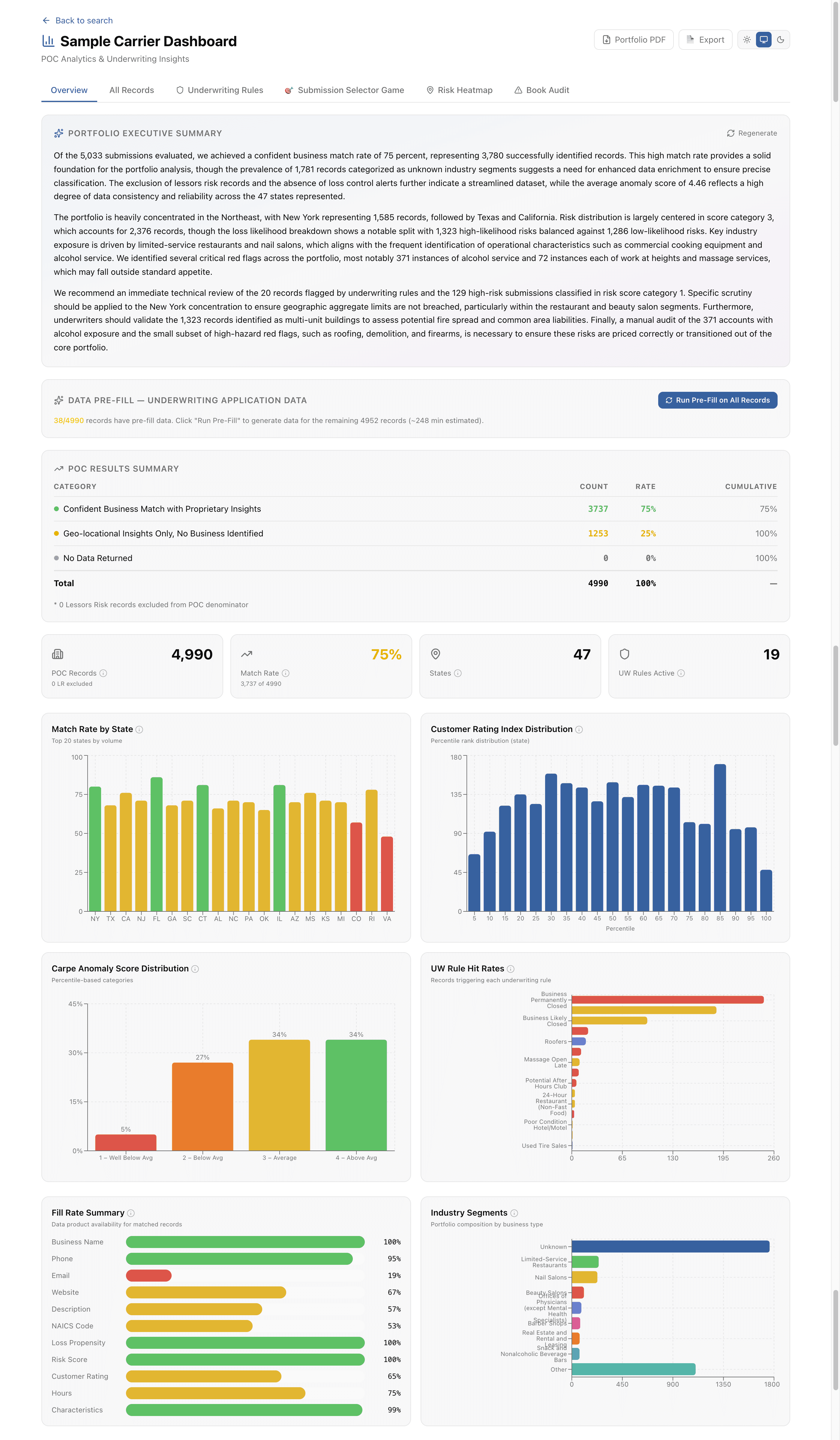
Claims triage stays centered on alerts, context, and next action.
Operating motion
How it works in practice.
Implementation
Implementation path and requirements.
4-6 weeks to launch for an initial claims segment.
Steps
Requirements
Why buyers trust it
Built for reviewable output and real workflow fit.
Enterprise buyers care about signal quality, output clarity, and whether the product fits how teams already make decisions.
Built around reviewable alerts instead of opaque scoring alone
Designed to reduce manual searching, not add another research burden
Fits naturally into claims and SIU collaboration
Expansion path
Related products and the next logical motion.
This product sits inside the broader claims intelligence story and can expand into adjacent workflows cleanly.
Expansion path
FAQ
Questions teams ask before rollout.
Answers on data sources, implementation, pricing model, integration, and compliance.
What data sources power Online Injury Alerts?
The product uses publicly available digital and market signals relevant to injury claims, combined with carrier-provided claim context for prioritization.
How long does implementation take?
Most carriers launch an initial claims segment in 4-6 weeks, then expand after validating early leakage and triage outcomes.
How is pricing typically structured?
Pricing is usually aligned to monitored claim volume and deployment scope so buyers can scale usage as operational value is proven.
Does this integrate with existing claims platforms?
Yes. Outputs can be routed into current claims and SIU workflow through configurable delivery patterns and integration options.
How do you handle compliance expectations?
The workflow is designed for reviewable output and controlled usage, supporting carrier governance, legal review, and audit requirements.
See this product in a live workflow walkthrough.
Carpe can tailor the conversation around the buyer, the operating problem, and the adjacent products that matter most for adoption.